
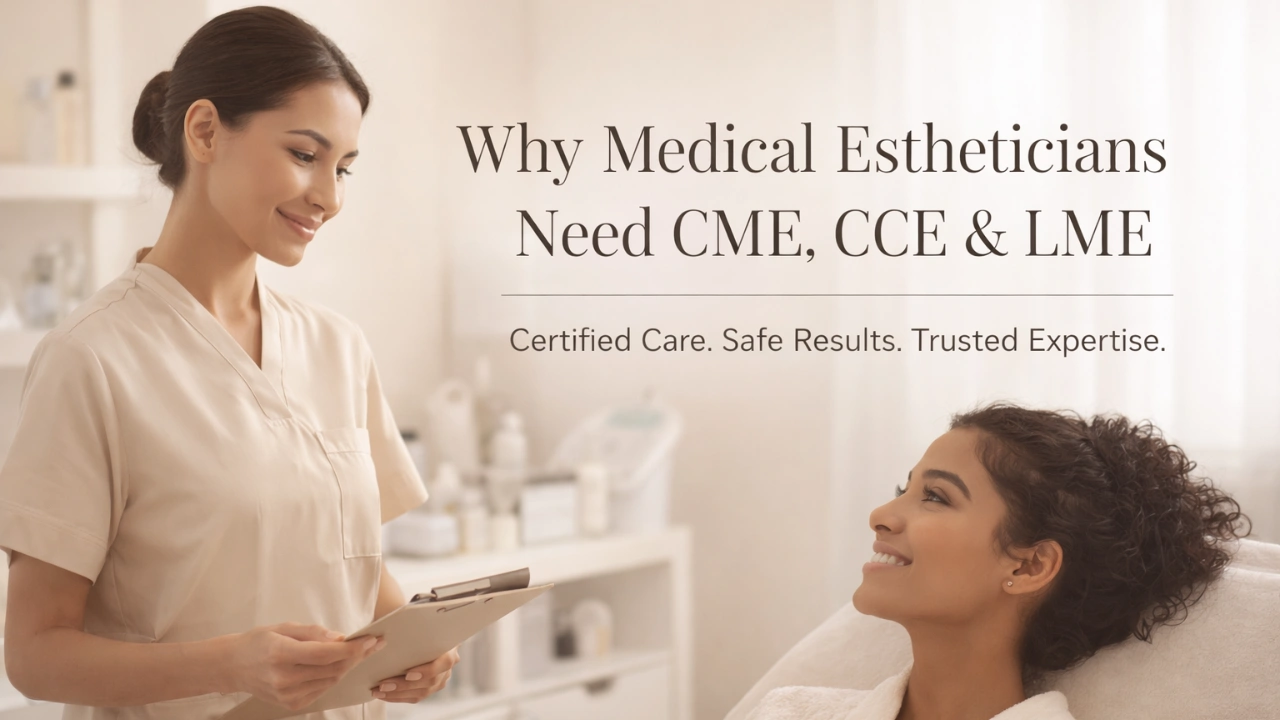
In today’s fast-growing skincare industry, choosing a certified medical esthetician can make all the difference for both safety and results. Credentials like CME (Continuing Medical Education in Esthetics), CCE (Certified Clinical Electrologist), and LME (Licensed Medical Esthetician) demonstrate that a professional has undergone specialized training, stays updated on the latest techniques, and follows strict safety protocols. Many clients aren’t aware of what these certifications mean, but understanding them helps in selecting the right expert for treatments ranging from everyday facials to advanced procedures covered in Skin Rejuvenation Treatments. A licensed medical esthetician can also provide guidance on the most effective routines, supported by our resources like Top Skincare Tips and Skincare Routine for Beginners. Whether you are exploring Medical Esthetics or looking to enhance your skin’s health safely, understanding these certifications ensures you’re trusting your skin with a qualified professional. Choosing certified expertise is not just a preference—it’s an investment in your skin’s long-term glow and health.
The skincare industry is rapidly evolving, and clients now have multiple treatment options—from facials to advanced medical-grade skincare procedures. This makes certified expertise more important than ever. Credentials and certifications verify an esthetician’s training, safety knowledge, and professional standards, ensuring clients receive safe and effective care.
A certified medical esthetician possesses specialized training and experience that goes well beyond basic esthetician services. Understanding these certifications is essential for anyone seeking safe and results-driven skincare treatments.
1. CME – Continuing Medical Education in Esthetics
A CME esthetician is a professional who continuously updates their training and medical knowledge. CME programs educate estheticians on the latest treatment techniques, skin science, and clinical safety protocols, ensuring clients receive safe, evidence-based treatments. Learn more about advanced procedures in our Skin Rejuvenation Treatments guide.
2.CCE – Certified Clinical Electrologist
CCE certification is essential for professionals specializing in electrology or permanent hair removal. Training covers hair growth biology, electrical currents, infection control, and precise hair removal techniques, guaranteeing treatments that are accurate, safe, and long-lasting. For additional insights, check Medical Esthetics.
3.LME – Licensed Medical Esthetician
Licensed Medical Estheticians (LME) are qualified to perform medical-grade procedures and advanced skin treatments. LME certification ensures that estheticians follow clinical skincare and dermatology protocols, allowing them to safely conduct chemical peels, laser facials, microneedling, and other high-level procedures. Beginners can also explore our Skincare Routine for Beginners guide for foundational tips.
A CME esthetician is a professional who continuously updates their skills and medical knowledge. CME stands for Continuing Medical Education, which provides estheticians with the latest techniques, clinical protocols, and skincare science updates. This certification ensures that a medical esthetician delivers safe and effective treatments that align with modern skincare standards.
Staying Updated with the Latest Techniques
The skincare industry evolves rapidly. New treatments, chemical peels, lasers, and advanced facials are regularly developed. CME estheticians learn these updates to provide evidence-based and effective procedures for clients. Learn more about advanced treatments in our Skin Rejuvenation Treatments guide.
1.Ensuring Client Safety
CME programs teach estheticians infection control, proper machine handling, and skin safety protocols. This training ensures that every treatment is risk-free and professional.
2.Boosting Professional Credibility
Client trust grows when they choose a certified esthetician. CME certification highlights a medical esthetician’s credibility and expertise. Check Medical Esthetics to learn more about certified estheticians.
3.Customizing Treatments Effectively
CME estheticians use their advanced knowledge to design personalized treatments based on a client’s skin type and goals. This approach improves results and helps maintain long-term skin health. Beginners can also explore our Skincare Routine for Beginners guide.
A CCE certification provides a professional with specialized training in electrology and permanent hair removal. Electrology is a medical-grade procedure used for permanent hair removal using electrical currents, and certified training ensures that treatments are safe, precise, and effective.
1.Expertise in Hair Removal
Certified Clinical Electrologists receive detailed training in hair growth biology, skin anatomy, and electrical current techniques. This ensures that a medical esthetician can design a personalized and safe hair removal plan for each client.
2.Safety & Sanitation Standards
CCE programs teach estheticians infection control, sterilization, and professional hygiene protocols. This minimizes the risk of infection or skin damage, which is essential for professional medical-grade skincare treatments.
3.Professional Credibility
CCE certification highlights a medical esthetician’s expertise and credibility. Clients are more likely to trust certified estheticians who provide safe, effective, medical-grade treatments. For more insights, check Medical Esthetics.
4.Advanced Treatment Techniques
Certified Clinical Electrologists perform customized treatments for different hair and skin types. This approach ensures long-lasting results and boosts client satisfaction. Beginners and those seeking routine guidance can refer to our Skincare Routine for Beginners guide.
A Licensed Medical Esthetician (LME) is a professional who is officially licensed to perform medical-grade skincare treatments and advanced procedures. LME certification provides estheticians with clinical-level training and regulatory compliance, ensuring safe, effective, and personalized skincare for clients.
1.Advanced Skincare Expertise
LME professionals can safely perform chemical peels, microdermabrasion, laser facials, microneedling, and other medical-grade treatments. This ensures clients receive maximum benefits with minimal risk. Learn more about advanced procedures in our Skin Rejuvenation Treatments guide.
2.Client Safety & Compliance
LME training teaches estheticians infection control, sanitation, and proper device usage. This compliance aligns with healthcare regulations and guarantees a safe, hygienic, and professional treatment environment.
3.Credibility & Professional Recognition
LME certification boosts a medical esthetician’s credibility and trustworthiness. Clients prefer certified estheticians because they follow evidence-based treatments and professional standards. Check Medical Esthetics to learn more about certified professionals.
4.Personalized Treatment Plans
LME estheticians design customized medical-grade skincare plans based on a client’s skin type, condition, and goals. Beginners and those seeking routine guidance can refer to our Skincare Routine for Beginners guide.
Choosing a certified medical esthetician with credentials like CME, CCE, and LME is essential for both safety and treatment effectiveness. These certifications ensure that estheticians follow clinical standards, evidence-based practices, and professional protocols, giving clients peace of mind and optimal results.
1.Client Safety
Certified estheticians are trained in infection control, proper sanitation, and safe machine handling, minimizing risks such as skin irritation, infections, or improper treatment techniques. This ensures that every procedure is risk-free and professional.
2.Treatment Effectiveness
Proper certification guarantees that estheticians deliver visible, long-lasting results. Whether it’s a facial, chemical peel, laser procedure, or hair removal treatment, a certified medical esthetician applies advanced techniques tailored to each client’s skin type and condition.
3.Professional Trust & Confidence
Clients naturally trust certified estheticians because credentials demonstrate expertise and credibility. Certifications like CME, CCE, and LME prove that the professional follows industry standards and best practices, building client confidence.
4. Integration of Advanced Knowledge
These certifications allow estheticians to integrate multiple medical-grade treatments safely, providing clients with comprehensive skincare solutions. By combining knowledge from CME, CCE, and LME training, professionals can design personalized treatment plans that maximize results.
Long-Term Skin Health
Certified estheticians not only provide immediate aesthetic improvements but also ensure long-term skin health by following evidence-based protocols and recommending safe, effective skincare routines. Beginners can start with our Skincare Routine for Beginners guide.
Clients in the skincare industry often do not understand the difference between licensed specialists and general estheticians. This distinction directly impacts treatment safety, effectiveness, and professional expertise.
Licensed Specialists (CME, CCE, LME certified):
These estheticians complete advanced training and medical-grade certifications. Their education focuses on clinical protocols, infection control, and advanced skincare techniques, enabling them to perform safe and effective treatments.
General Estheticians:
General estheticians complete basic skincare training with a limited scope. They mostly provide facials, basic waxing, and general skincare advice, but they are not qualified to perform medical-grade procedures.
Licensed specialists follow strict hygiene and treatment protocols, minimizing the risk of skin irritation, infection, and unwanted reactions. General estheticians have limited training and are not prepared for risk exposure in advanced procedures.
Certified professionals deliver better results through advanced knowledge and personalized care. They design treatments according to skin type, condition, and client goals, whereas general estheticians primarily offer basic solutions and standard routines.
Clients tend to trust certified specialists because they provide evidence-based, safe, and professional treatments. Licenses like CME, CCE, and LME demonstrate professional credibility, which is not present with general estheticians.
Looking for risk-free and effective results for your skin? Always choose a certified medical esthetician with CME, CCE, and LME credentials. Certified professionals use their training and expertise to provide treatments that enhance long-term skin health, safety, and natural glow. Learn more about our Medical Esthetics services and book your consultation today to experience expert care.
Subscribe and get weekly skincare tips, expert advice, and exclusive freebies delivered straight to your inbox. From step-by-step routines to downloadable PDFs, we’ll keep you glowing all year long.