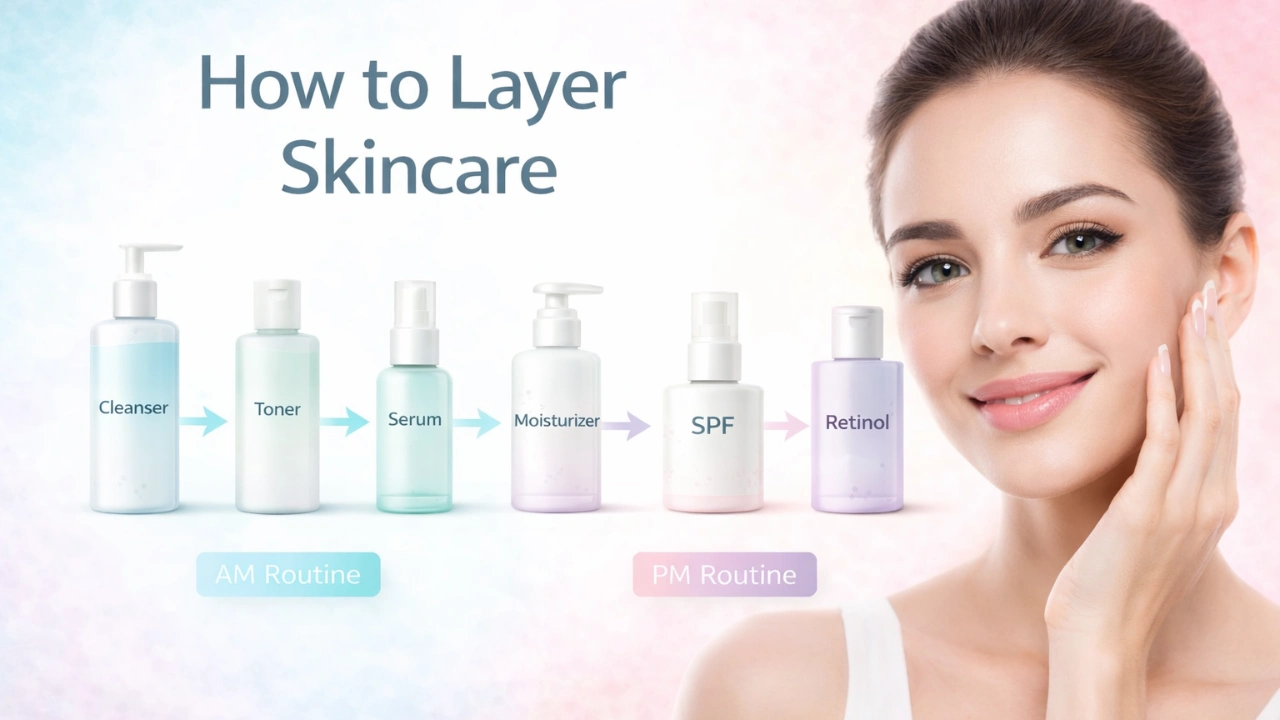
How to Layer Skincare: Correct Order for AM & PM Routine (Step-by-Step)
By
Aby Ashland
If you’ve ever invested in quality skincare products but felt underwhelmed by the results, the issue may not be what you’re using—but how you’re using it. Learning how to layer skincare correctly is one of the most important yet overlooked parts of an effective skincare routine.
Skincare products are designed to work in a specific order. Applying them incorrectly can reduce absorption, cancel out active ingredients, or even irritate your skin. In this guide, you’ll learn the correct order to layer skincare products, how AM and PM routines differ, and how to safely layer active ingredients like retinol, acids, and vitamin C for healthy, glowing skin.
Key Takeaways
Layer skincare from thin to thick so products absorb properly.
Your AM routine focuses on protection (especially SPF).
Your PM routine supports repair and recovery with treatments.
Introduce active ingredients slowly to avoid irritation and barrier damage.
Consistency beats complexity—simple routines often work best.
Why Skincare Layering Order Matters
Your skin can only absorb so much at once. When products are applied in the wrong order, heavier formulations can block lighter, more active ingredients from penetrating the skin properly.
Correct layering helps:
Maximize ingredient absorption
Protect the skin barrier
Reduce irritation and breakouts
Improve long-term skin health
Understanding proper skincare order is especially important if you’re following a holistic skincare approach, where skin health is treated as part of overall wellness rather than a quick cosmetic fix.
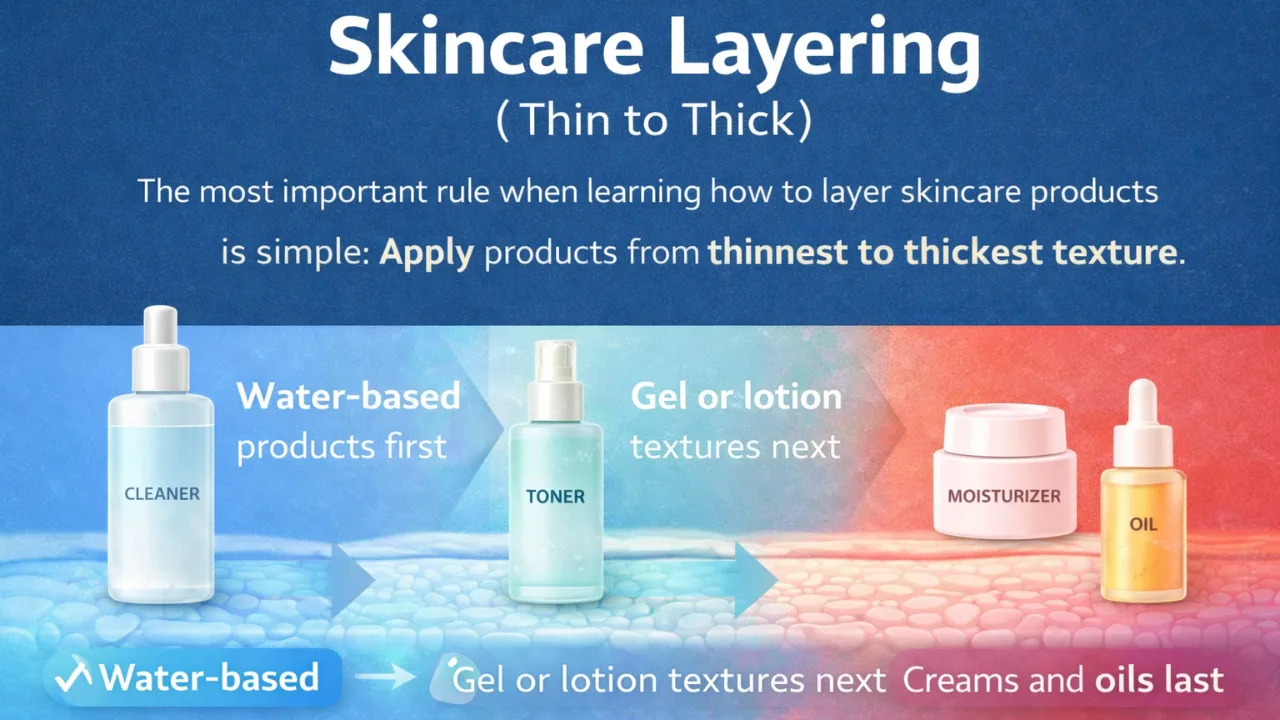
The Golden Rule of Skincare Layering (Thin to Thick)
The most important rule when learning how to layer skincare products is simple:
Apply products from thinnest to thickest texture.
This usually means:
Water-based products first
Gel or lotion textures next
Creams and oils last
Why? Lighter products absorb quickly and deliver active ingredients deeper into the skin. Thicker products seal everything in.
Exceptions to the rule:
Sunscreen always goes last in the morning
Some treatment products (like retinol) need special placement
Pro Tips
Apply serums on slightly damp skin for better hydration and spread.
If using retinol, try the “retinol sandwich” (moisturizer → retinol → moisturizer) for sensitive skin.
Don’t stack strong actives in one routine (e.g., retinol + AHA/BHA) unless your skin tolerates it well.
Give products time—track changes weekly, not daily.
Wear SPF every morning, even on cloudy days or indoors near windows.
How to Layer Skincare in the Morning (AM Routine)
Your morning routine should focus on protection and hydration.
1
Cleanser
Cleansing removes overnight oil buildup, sweat, and skincare residue. A gentle cleanser prepares your skin to absorb the products that follow without stripping moisture.
If your skin is sensitive or post-treatment, gentle cleansing is especially important—particularly after advanced procedures like laser treatments.
See
laser treatments and safe skincare expertise
on Aby Ashland for post-procedure guidance.
2
Toner (Optional)
Toners are not mandatory, but hydrating toners can:
Rebalance skin after cleansing
Add light hydration
Improve serum absorption
Avoid exfoliating toners in the morning if you use active treatments at night.
3
Serums (Vitamin C, Hyaluronic Acid)
This is where targeted skincare begins.
Vitamin C helps brighten skin and protect against environmental damage
Hyaluronic acid draws moisture into the skin and works well with most products
Apply serums while the skin is slightly damp for better absorption.
4
Eye Cream
Eye creams should be applied before heavier moisturizers. Use a gentle tapping motion to avoid pulling the delicate skin around the eyes.
5
Moisturizer
Moisturizer locks in hydration and supports the skin barrier. Even oily skin needs moisturizer to prevent dehydration and overproduction of oil.
6
Sunscreen (SPF)
Sunscreen is non-negotiable. It is always the final step in your morning Skincare Routuine.
Daily sunscreen use is essential for preventing premature aging, pigmentation, and skin damage. If you’re unsure why SPF matters so much, see why sunscreen is important on Aby Ashland.
How to Layer Skincare at Night (PM Routine)
Your nighttime routine is all about repair and renewal.
1
Makeup Remover or Oil Cleanser
If you wear makeup or sunscreen, start with an oil cleanser to dissolve buildup.
2
Cleanser
Follow with a gentle water-based cleanser to fully cleanse the skin without disrupting the barrier.
3
Toner or Essence
Hydrating toners or essences prep the skin and help calm irritation before treatments.
4
Treatment Products (Retinol, Acids)
Nighttime is best for active ingredients.
Retinol supports skin renewal and collagen production
Acids (AHA/BHA) exfoliate and improve texture
If you’re unsure whether retinol is right for you, compare options in
retinol vs bakuchiol
on Aby Ashland.
5
Serums
After treatments, use calming or hydrating serums to support recovery.
6
Moisturizer or Night Cream
A richer moisturizer at night helps repair the skin barrier while you sleep.
7
Face Oils or Sleeping Masks (Optional)
Oils should always be the final step. They seal in moisture but do not hydrate on their own.
How to Layer Skincare with Active Ingredients
Active Ingredient
How to Layer It
Important Notes
Vitamin C
• Use in the morning
• Apply before moisturizer
• Pair with sunscreen
• Avoid mixing with strong exfoliating acids in the same routine
Retinol
• Apply on dry skin at night
• Follow with moisturizer
• Use moisturizer before and after for sensitive skin
• Never combine with exfoliating acids in the same routine
Acids (AHA/BHA)
• Use 1–3 times per week
• Apply after cleansing
• Avoid mixing with retinol
• Follow with soothing products
Hyaluronic Acid
• Apply first on damp skin
• Use before heavier products
• Works well with retinol, vitamin C, and niacinamide
• Always seal with moisturizer
Common Skincare Layering Mistakes to Avoid
Using too many actives at once
Applying thick creams before serums
Skipping sunscreen
Changing routines too frequently
Overloading the skin often leads to irritation rather than results.
How Long to Wait Between Skincare Layers
You don’t need to wait minutes between every product.
General guideline:
30–60 seconds between layers
Wait until the product feels lightly absorbed
Allow retinol or acids to absorb fully before moisturizing
Every Skin Type is unique. If you’re unsure how to layer Skincare Products
or which ingredients are right for your skin, professional guidance can
make all the difference.
Learning how to layer skincare correctly can completely transform your results. Whether your goal is healthy aging, acne control, or overall skin wellness, using products in the right order allows them to work as intended.
Keep your routine simple, stay consistent, and adjust based on your skin’s needs. With the right layering technique—and thoughtful product choices—healthy, balanced skin becomes much easier to achieve.
Top FAQs
What is the correct order to layer skincare?
Follow thin to thick: cleanser → toner/essence (optional) → serums → treatments → moisturizer → (AM) sunscreen. Sunscreen is always last in the morning.
How long should I wait between skincare layers?
Usually 30–60 seconds is enough—just wait until the previous layer feels lightly absorbed. Treatments like acids or retinol may need a little longer.
Can I use multiple serums in one routine?
Yes. Layer from watery to thicker textures. Keep it simple—two serums is usually plenty (example: hyaluronic acid + niacinamide).
Can I layer retinol with other skincare products?
Yes, but don’t combine retinol with strong exfoliating acids in the same routine. Pair retinol with hydrating and barrier-supporting products to reduce irritation.
What’s the simplest routine that still works?
A solid routine is: cleanser + moisturizer + SPF (AM) and cleanser + moisturizer (PM). Add one treatment (like retinol) only when your skin is stable.
Subscribe and get weekly skincare tips, expert advice, and exclusive freebies delivered straight to your inbox. From step-by-step routines to downloadable PDFs, we’ll keep you glowing all year long.